
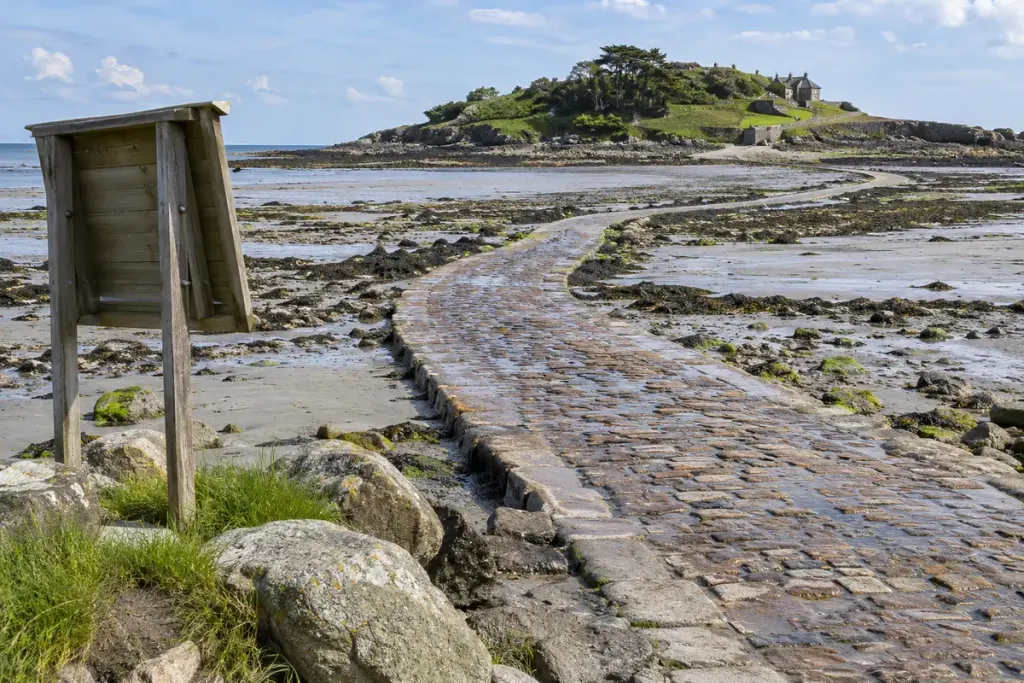
A dry causeway can make an island feel like an ordinary extension of the mainland. The return journey may tell a different story. Water can cover a route that was easy to walk earlier, leaving a visitor on the wrong side of the crossing window.
The RNLI’s tide-safety guidance stresses checking tide information and the risk of being cut off. For a particular causeway, use the local authority or site operator’s crossing advice as well. A general tide table is not automatically a schedule of safe passage for every route nearby.
Plan backwards from the return
Start with the latest recommended return time for the exact route and date, then allow for the walk back, stops and a margin for slower progress. Check the time zone and whether published times use local clock time. Do not assume yesterday’s window applies today.
For an illustrative outing, a group might want an hour at the destination and additional time for photographs. If those plans leave almost no margin before the stated return limit, shorten the visit or choose another day. Moving faster is not a dependable substitute for a suitable window.
Read signs at the crossing even if you checked online. Weather, closures and local conditions may change the plan. If advice conflicts or the route is already becoming covered, stay on the safe side and seek local guidance.
Agree what will trigger a change
Before setting out, make sure everyone knows the return deadline and who is keeping track of it. Carry a charged phone in a protected place, but do not treat reception or rescue as part of the itinerary.
Never attempt to drive or wade through a covered causeway because another person appears to have crossed. If trapped or in immediate danger, contact the local emergency service and follow its instructions. A successful coastal walk includes getting back while the route remains suitable, not merely reaching the destination.