
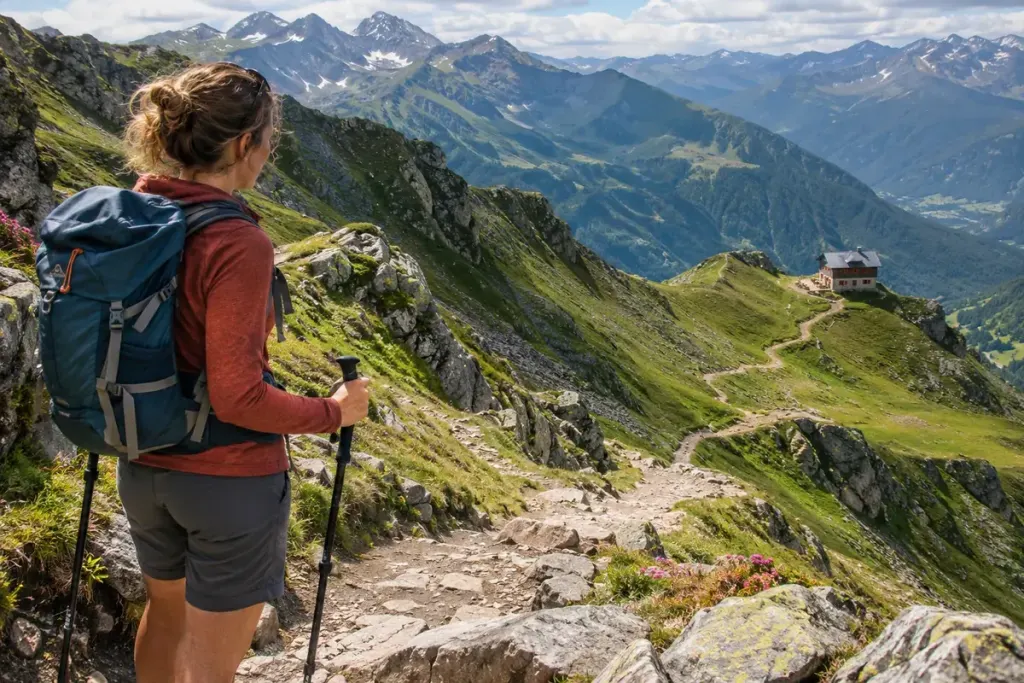
The hut photograph makes the uphill walk easy to imagine: a path, a terrace, and a view. The return journey often receives much less attention. Yet a long descent can be the part of the day that arrives when legs are tired, weather is changing, and the last bus is approaching.
Plan it as a route in its own right. “Back the same way” is a useful description only when you have considered what that way will be like later.
Read the return leg before departure
The Swiss Alpine Club’s mountain-hiking guidance includes terrain difficulty, time, key passages, alternatives, and turnaround options in planning. It also notes that conditions and the group can substantially change the time required.
For your chosen hut, identify the descent’s junctions, steep or exposed sections, and any remaining climbs. Check current route information, weather, and closures with appropriate local sources. A path that was straightforward in dry conditions may need a different decision when wet, snowy, or poorly visible.
Write down a realistic departure time from the hut that leaves margin for the group, breaks, and transport. Do not turn a published walking time into a deadline everyone must beat.
A bed booking does not certify the approach
For an overnight trip, confirm the hut arrangements separately from the route’s suitability. Availability of accommodation does not show that every approach is open or appropriate for your experience.
Discuss an alternative before the group is tired. It might be turning back earlier or choosing a less demanding route, but it should be a researched option rather than an apparent shortcut on a phone screen.
On arrival at the hut, reassess people and conditions before treating the plan as fixed. The useful question is not simply whether everyone reached the destination. It is whether the remaining journey still fits the daylight, weather, equipment, and energy available.