
Rain begins just as dinner is due, and the covered space outside the tent door looks tempting. A vestibule can shelter boots and equipment, but its presence does not make it a suitable kitchen. Moving a burning stove beneath tent fabric creates hazards that a convenient dry patch does not solve.
The US Consumer Product Safety Commission warns about carbon monoxide from camping equipment used inside tents. Outdoor-only stove instructions must be followed throughout use. Keep the stove out of the tent and vestibule, and follow its full placement, fuel and clearance requirements.
Make the weather decision before hunger does
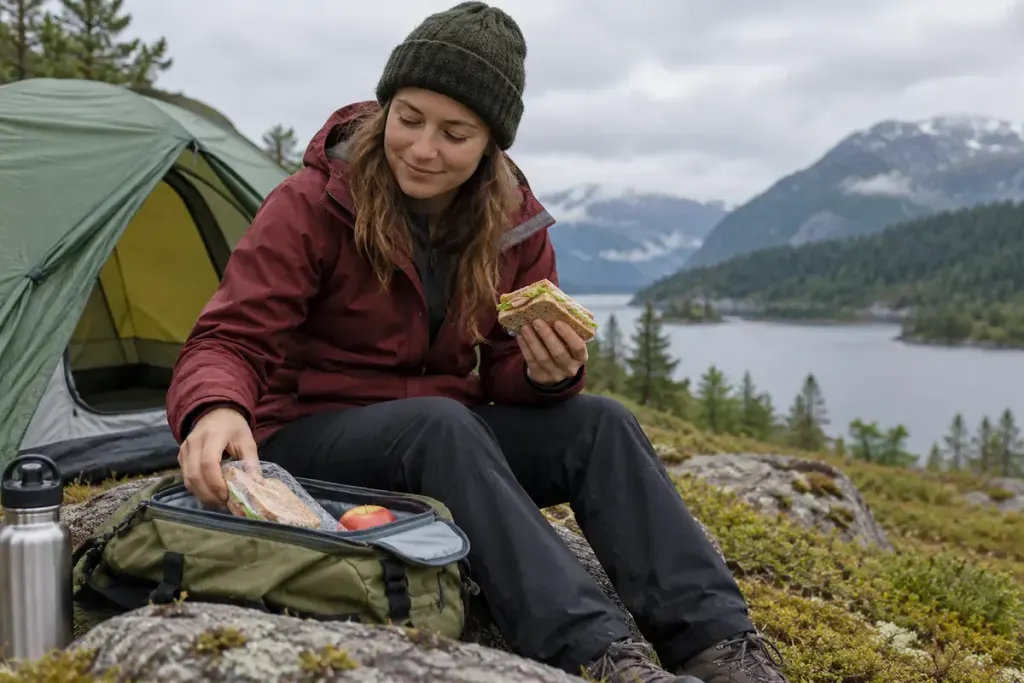
Plan meals that do not all depend on operating a stove. A suitable ready-to-eat backup gives you an option when conditions make cooking impractical. Check site rules and fire restrictions before departure, and reconsider the route or camping plan when the forecast demands it.
At camp, identify a permitted outdoor cooking location with a stable surface and the clearances required by the manufacturer. Keep it separate from entrances, people moving around camp and stored equipment. Do not improvise an enclosed shelter around the burner to defeat the weather.
Give the vestibule a different job
Use the space to organise suitable gear while keeping the exit clear. A bag placed across the doorway can complicate leaving quickly, even when no cooking is taking place. Keep fuel and equipment according to their instructions rather than treating every sheltered corner as equivalent storage.
Before a trip, ask the group one concrete question: “What will we eat if we cannot safely cook tonight?” Agree on the answer while supplies can still be changed.
Opening a tent flap is not a substitute for outdoor-only stove instructions. If the choice is between a cold meal and running a stove in the vestibule, the meal plan should make the safe decision easy.