
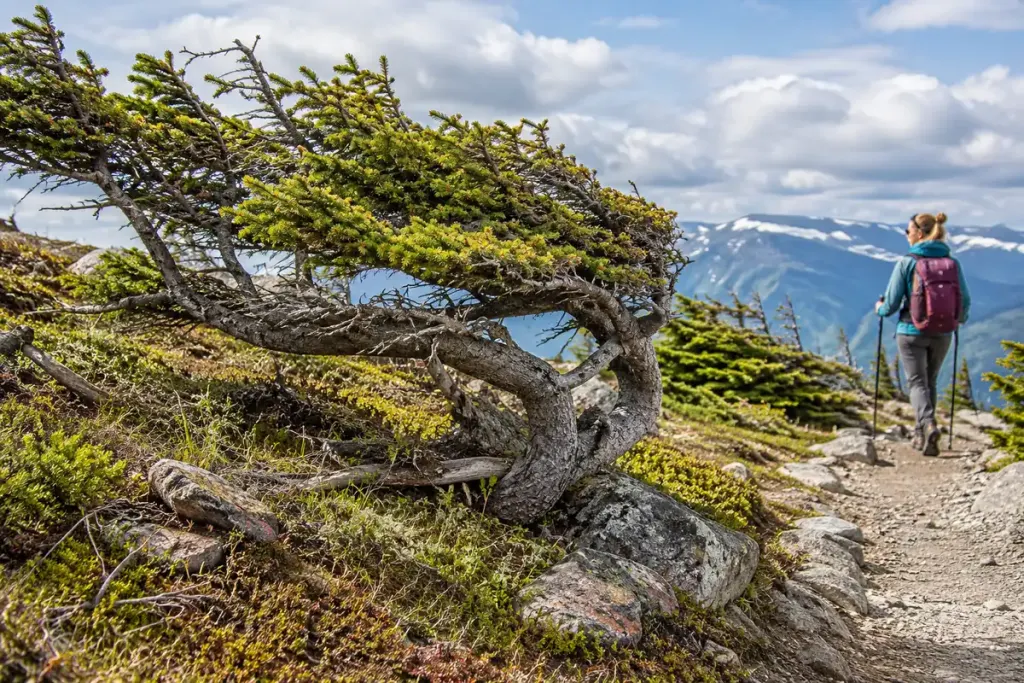
Near a mountain treeline, a tree may spread low over the ground instead of rising into a familiar upright shape. Branches can look twisted, flattened or strongly one-sided. These forms are often described as krummholz, a term meaning crooked wood.
The US National Park Service’s description of Great Sand Dunes ecosystems connects these stunted forms with wind, snow, ice, short growing seasons and difficult soils. The shape reflects a demanding environment, not necessarily a young tree that has not yet had time to grow.
Read the form cautiously
A low crown can suggest long exposure, but it cannot give you an exact age, wind speed or compass direction on its own. Species, terrain and local shelter influence the result. A single bent tree beside a path is not enough to reconstruct the site’s whole weather history.
Look across the slope. Are upright trees sheltered behind a ridge while exposed plants remain low? Does the form change with height? Those comparisons turn a striking individual tree into a question about the landscape.
Make a trail-side observation
From an established path, take a wide photograph that includes the terrain and a closer view without leaving durable ground. Record the date, approximate location and the feature you noticed. Avoid breaking a twig, pulling branches aside or climbing onto a low crown for a better picture.
A useful note might say “several low conifers on the exposed side, taller trees below the ridge”. Calling them all a particular species or assigning an age should wait until you have supporting evidence.
Let the trees influence how you travel
The transition to low, wind-shaped vegetation can remind a walker that shelter is changing. Check your layers, route and conditions before continuing into more exposed terrain. It is not a substitute for a forecast or a signal that a storm must be imminent.
Small trees can represent a long period of growth in a harsh setting. Give them space, keep rests and photographs on appropriate surfaces, and leave the living structure intact. The most rewarding observation is often the relationship between the tree and the place, rather than a close-up collected at its expense.