
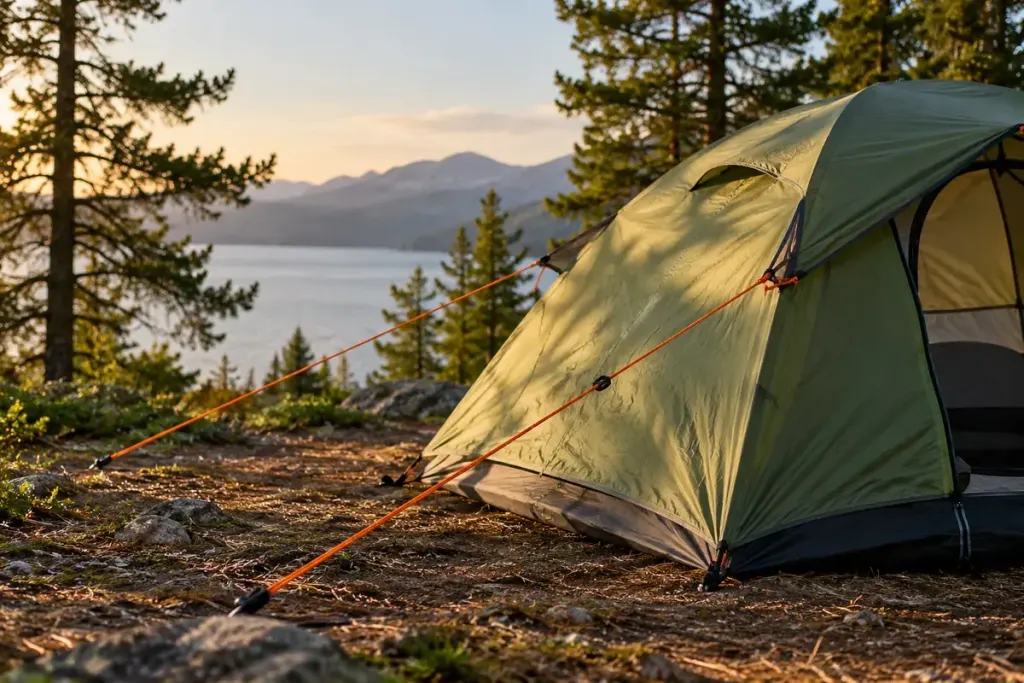
A guyline can be tight yet pull in an unhelpful direction. Its job is to support the tent’s intended structure and keep fabric positioned appropriately, not simply to connect the nearest loop to the nearest spare patch of ground.
Start with the pitching instructions for the exact tent. Identify the guyout points and any attachment that connects the fly to the pole structure. Follow the designed sequence before trying to correct an awkward pitch with extra tension.
Look along the line of pull
From each attachment, consider where the load is meant to travel. Position the anchor as the manufacturer directs, using equipment suitable for the ground and conditions. A very short line pulled steeply downward may do a different job from one extended outward.
Set tension gradually and check the whole tent. Pulling one side hard can distort the opposite side, strain seams or reduce the intended gap between layers. Firm support should not require visibly forcing the fabric beyond its designed shape.
Make the campsite usable after dark
Keep lines away from the main route between the door and shared facilities where possible. Make them visible and tell companions where they run. Recheck anchors and tension after the fabric settles or conditions change.
MSR’s guidance on wind and tent support notes the importance of appropriate stakes and guylines. It should not be read as a promise that adding lines makes any tent safe in any storm.
Practise in mild conditions before relying on an unfamiliar shelter. If forecasts exceed the equipment or your experience, change the plan or seek safer shelter. A good guyline arrangement is one part of a sound camp decision; site choice, equipment condition and the weather remain part of the same judgment.