
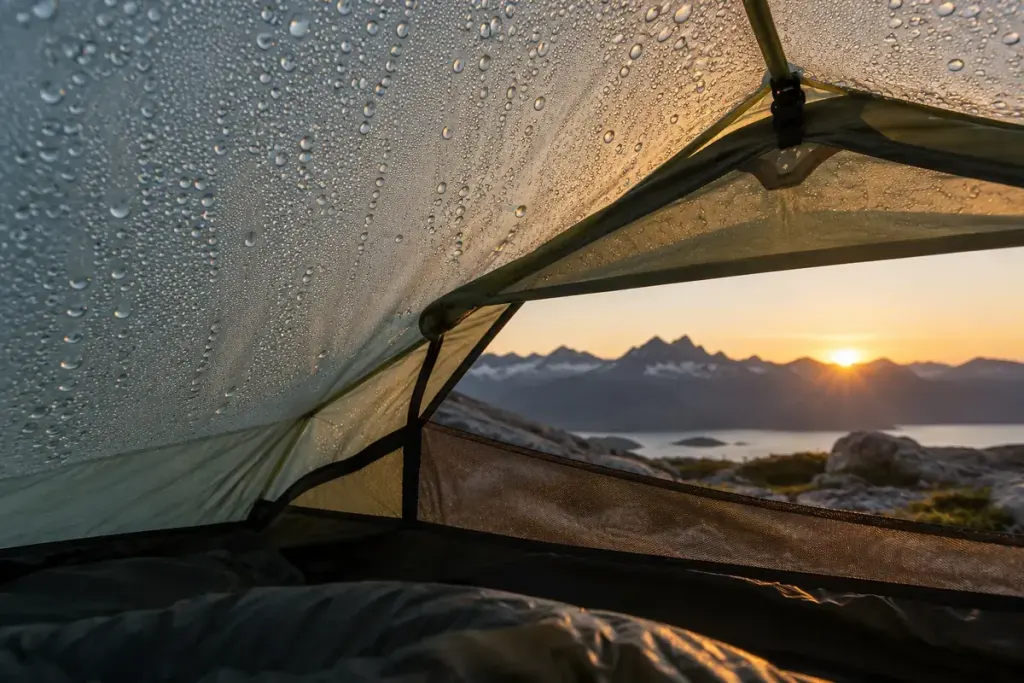
You wake to droplets above your sleeping bag even though the night was dry. That can happen when moisture inside the tent condenses on a colder surface. Water on the inner face does not, by itself, prove that rain has passed through the fabric.
REI’s tent-condensation guide describes ventilation, campsite choice and management of moisture sources as ways to reduce the problem. Breathing, damp equipment and humid surroundings can all contribute; a tent is not a sealed room with controlled indoor air.
Record where the water appears
Look for a broad film of droplets on a cool inner surface versus a more localised wet patch near a seam or damaged area. These observations help investigate the cause, but they are not a definitive leak test. Rain entry and condensation can occur during the same night.
In an illustrative camp log, note the weather, which vents were open, where wet clothing was stored and where the droplets formed. Comparing several nights is more informative than deciding that the tent has failed after one damp morning.
Give moisture a route out
Use the ventilation provided by the tent design while maintaining suitable weather protection. Pitch a double-wall tent with the intended separation between inner and fly, following its instructions. Keep wet gear from pressing against sleeping equipment, and avoid closing every opening simply because the air feels cool.
Never use a stove or other fuel-burning appliance inside a tent to dry it. The fire and carbon-monoxide risks are not an acceptable trade for less moisture.
Dry and inspect when conditions allow
Wipe away accessible moisture gently and air the tent when practical. If a particular area repeatedly wets during rain, inspect it according to the manufacturer’s care guidance. Pack the tent dry where possible, or unpack it promptly to dry later. The goal is to manage moisture and identify real damage without confusing every droplet with a failed waterproof layer.