
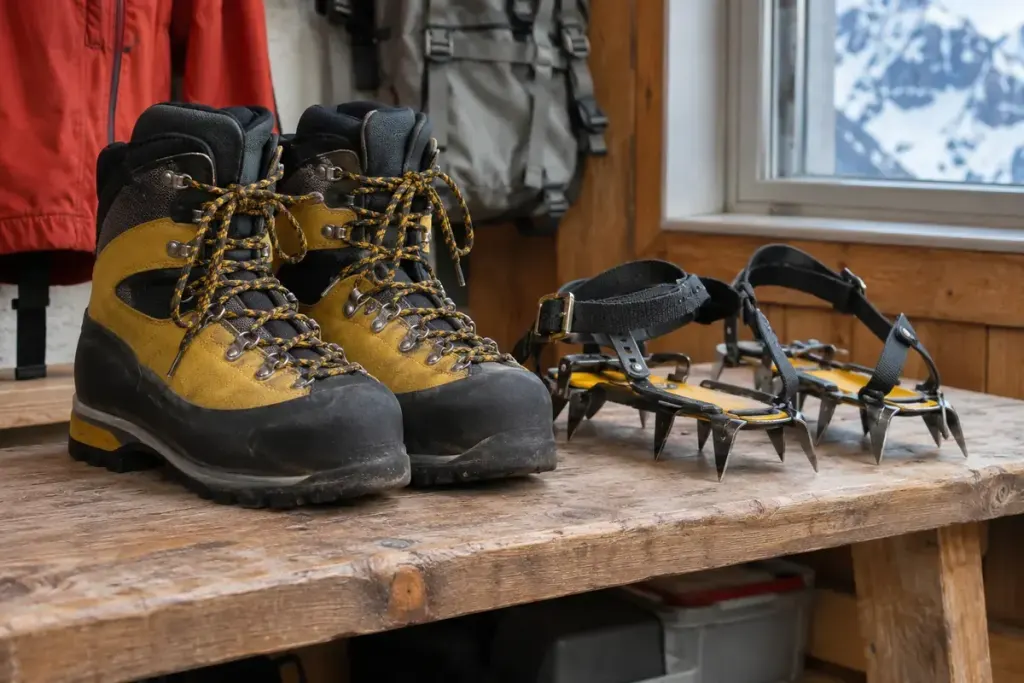
A crampon can appear to sit neatly beneath a boot while still being the wrong match. Binding style, boot shape and stiffness all affect the connection. Sorting that out on an indoor fitting bench is far easier than discovering a problem at the start of a winter route.
Petzl’s crampon selection guidance distinguishes binding arrangements and the footwear they are intended to fit. A rear welt, front welt or flexible upper changes the available options. Similar-looking boots are not necessarily interchangeable, and a nominal size range does not prove compatibility.
Take the actual boots to the fitting
Bring both boots, the crampons and the relevant instructions to a competent retailer, instructor or equipment professional. Include any replacement binding components rather than describing them from memory. The complete combination is what needs checking.
Ask how the manufacturer specifies adjustment and inspection for that exact setup. Check that the relevant components are approved together and that wear or damage has not changed the fit. The manufacturer’s compatibility documentation is a better starting point than assuming that every strap, lever or front binding can be swapped freely.
A useful equipment record lists boot model and size, crampon model, binding components and the instruction version used. It helps you identify what changed when you replace footwear or borrow equipment next season.
Match the plan as well as the boot
Crampons and lightweight traction devices serve different conditions and activities. Neither the word “winter” on a product nor a convincing fit answers whether a particular route is appropriate for your experience. Terrain, snow and ice conditions, weather, navigation and emergency options remain separate planning decisions.
Seek qualified instruction for the skills the intended terrain requires. Do not use a short buying guide as a substitute for learning safe movement, assessment and retreat decisions in winter conditions. A route change is a sensible outcome if the equipment or competence does not match the day.
After a fitting, follow the manufacturer’s inspection and care instructions and repeat the check when a component changes. The aim is not simply to own a boot and a crampon that share a size label. It is to understand a verified equipment combination within a realistic trip plan.