
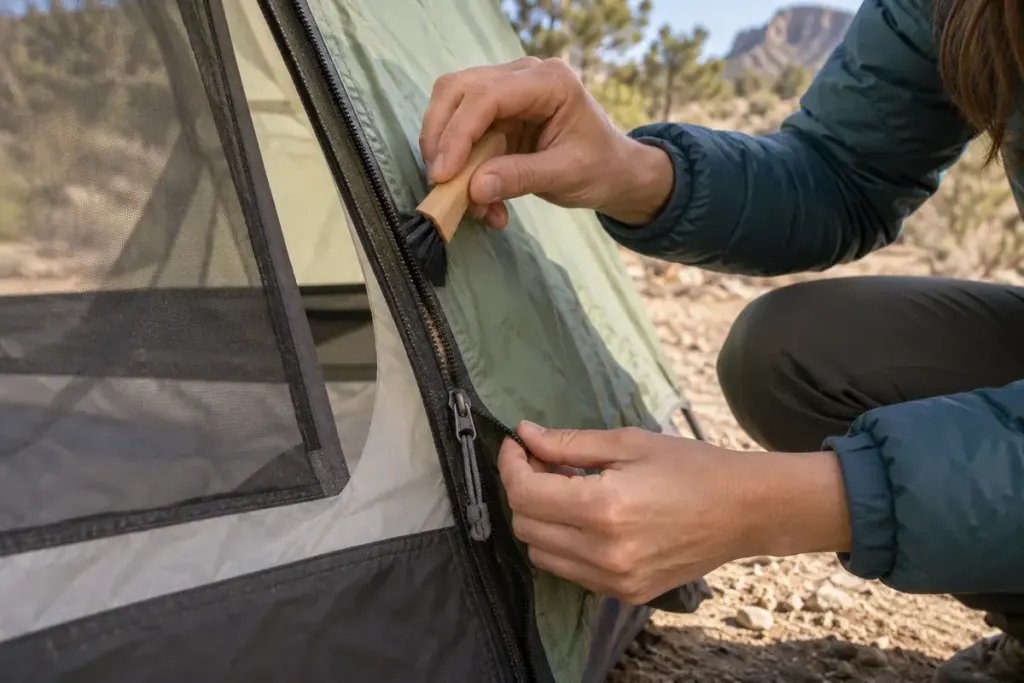
A tent door catches halfway closed. Pulling harder may feel like the quickest solution, especially in bad weather, but grit, trapped fabric or excessive tension can turn that extra force into damage.
Pause and look at the zip’s path. Is a flap caught in the slider? Are the two sides being pulled apart by the pitch? Is sand visible in the coil? These observations lead to different next steps.
REI’s tent-cleaning guide recommends brushing dirt from zip teeth and rinsing stubborn dirt before brushing again. Use the current care instructions for your particular tent when choosing a cleaning method.
Reduce the strain first
If fabric is trapped, stop and gently reverse the slider enough to release it where possible. Do not yank the fabric sideways or use pliers to force the slider through. Check the tent’s pitch and adjust only as the manufacturer’s instructions permit.
For dirt, remove loose material gently and use the recommended cleaning method. A product-specific instruction to rinse a zip is different from permission to pressure-wash the whole tent. Avoid oils, household lubricants or cleaners unless the maker confirms they are suitable for the zip, fabric and coatings.
At home, inspect the full length after cleaning. Look for damaged teeth or coil, a distorted slider and stitching that has begun to separate. A zip that opens behind the slider or repeatedly fails may need a repair assessment rather than another application of lubricant.
Let the tent dry completely before storage. Keep the care record and any repair advice with the model details so the next problem can be discussed accurately.
Check before relying on it overnight
Pitch the tent before a trip and operate each door under normal tension. Test the inner and outer doors separately, including access from inside. A successful check in the garden is a useful opportunity to arrange repair before the shelter is needed in remote conditions.
A small brush and the maker’s recommended maintenance supplies can be useful, but they do not replace a functioning closure. The key habit is to investigate resistance early, while a minor obstruction is still a minor problem.