
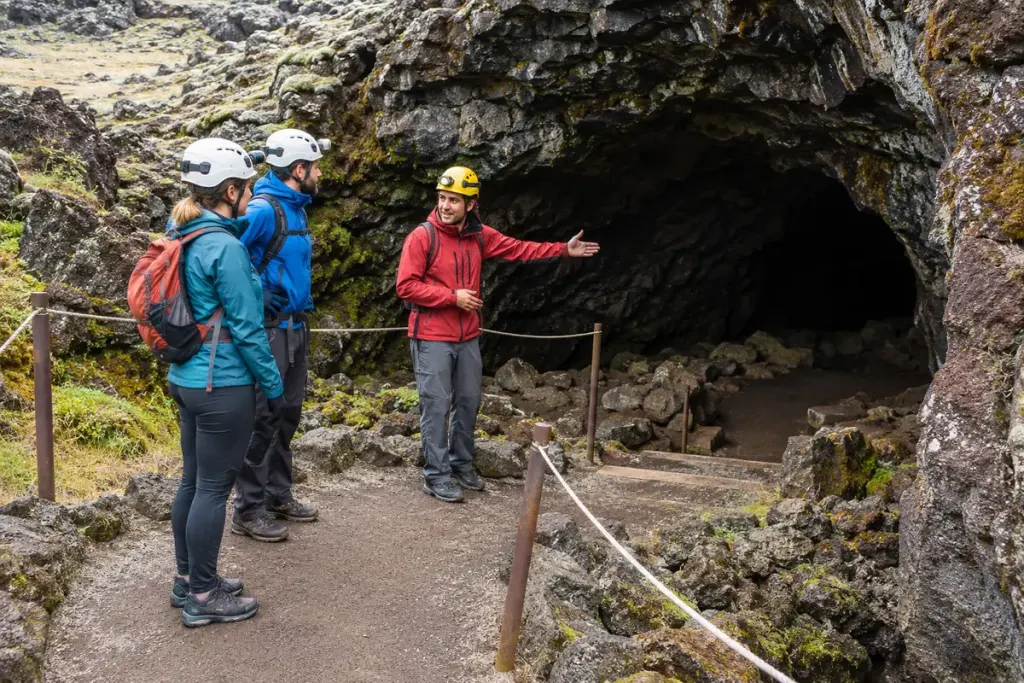
A lava tube entrance can look like a short detour: a dark opening, a few steps and daylight still behind you. The important planning question is what happens after that first bend. Visitor caves vary enormously, from managed walk-through routes to undeveloped passages that require specialist experience.
Start with the land manager’s page for the particular tube, rather than a photograph from somebody else’s trip. A route described as easy in one park tells you very little about another cave with the same geological name.
Read the approach and the underground route separately
The National Park Service’s Mojave Lava Tube information describes an approach involving rough roads and a ladder. Those details affect whether the visit is suitable before anyone reaches the underground section. Transport, mobility and the return journey all belong in the decision.
By contrast, the visitor information for Nāhuku in Hawaiʻi Volcanoes National Park discusses a managed visitor route and hazards including low ceilings, uneven footing, water and limited light. Check its current access and lighting information close to the visit; an old itinerary cannot confirm today’s conditions.
Make a cave-specific decision card
On your itinerary, give the cave its own short entry. Record the official route name, whether access is currently permitted, how the entrance is reached and what equipment the manager requires. Add the time you need to return to the vehicle or trail junction. Keep that information available offline.
Discuss the narrowest practical constraint with everyone going. A ladder, a low passage or an unlit section may change the plan for one person even when the total walking distance seems modest. Agree on a surface alternative so that turning back does not become a negotiation at the entrance.
Do not extend a visitor walk into an unmarked passage because it appears to continue. The NPS’s El Malpais caving guidance makes clear that undeveloped caves involve different preparation and conservation restrictions, including closures that protect bats.
The best souvenir is a visit that fits both the place and the group. Follow the site’s instructions about footwear, lighting, cleaning equipment and touching surfaces, and leave the underground environment as you found it.