
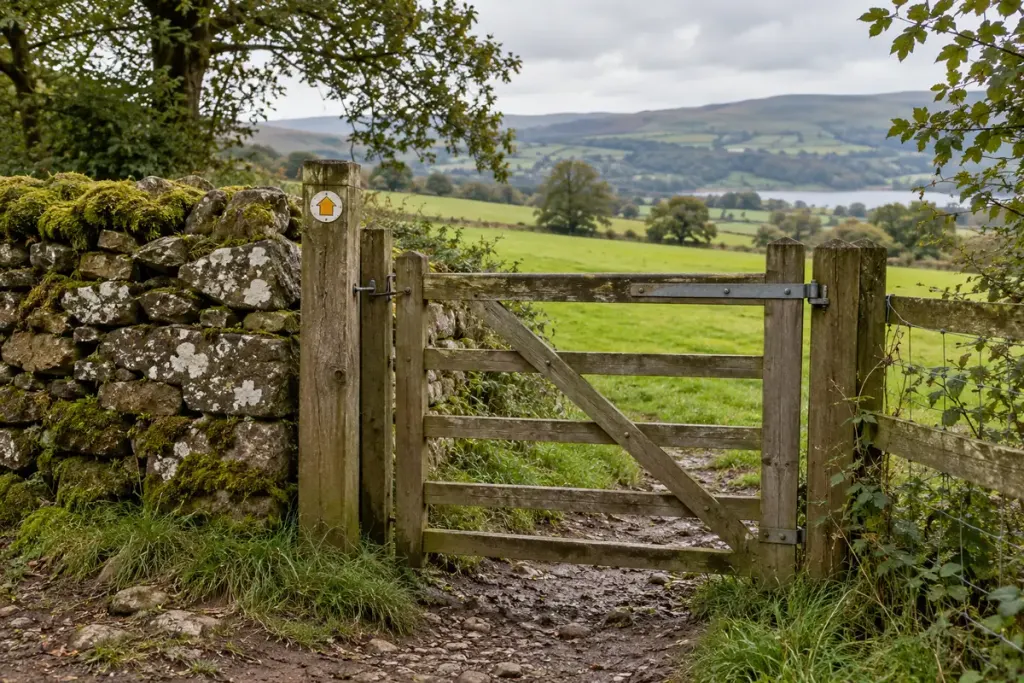
The first walker opens a gate, the group streams through and everyone carries on. A minute later, nobody remembers whether the gate was originally open or closed. A small handover would have prevented the uncertainty.
For England and Wales, the Countryside Code says to leave gates as found or follow instructions on signs. It explains that a closed gate can contain livestock, while an open one may provide access to food or water. Closing every gate automatically is therefore not a universal kindness.
Tell the person who will finish the crossing
Notice the gate’s position before opening it. Read any local instruction, then tell the last person in your group what to do. A direct “this one was closed; please latch it behind us” is clearer than hoping they saw how it began.
Wait until the group is safely through before completing the action. Do not leave a heavy gate swinging towards the next walker, and do not use it as a seat or climbing frame.
Keep the gateway useful
Choose another place for a long snack stop or a group photograph. A gateway may need to remain available to land workers or other path users. Keep bags and walking poles out of the passage while people cross.
If a latch is damaged or a gate will not work normally, avoid inventing a repair that could fail or trap someone. Note the location and report the problem through the relevant land manager or path authority when possible. Give livestock space rather than trying to move animals yourself.
Outside England and Wales, check the local access rules and signs before assuming the same wording applies. A gate is part of the land’s working arrangement, and a marked walking route does not make every adjacent field an alternative path.
Agree the handover early in the walk. It takes seconds and leaves much less room for the last person to guess.