
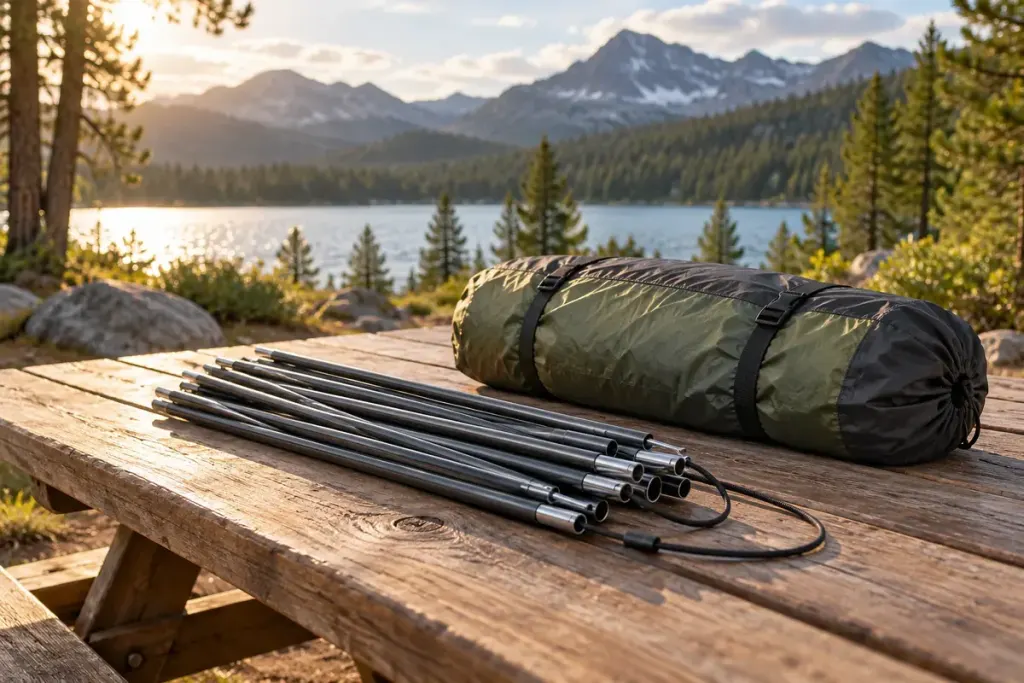
A segmented tent pole can feel like one continuous object because an elastic cord runs through it. That cord keeps the pieces in sequence and helps draw them together. It is not a substitute for fully engaged joints in the pole itself.
When the cord becomes slack, the sections can separate while you assemble the frame. Treat that as a maintenance issue to investigate before a trip, rather than trying to compensate by bending a partly connected pole into place.
Seat each joint before loading the frame
Lay the sections out and assemble them with control. Check each connection before placing the pole under tension. Do not flick the folded bundle outward and let the cord snap all the sections together; impacts and misaligned joints can damage the ends.
MSR’s tent-care guidance provide manufacturer guidance on pole care and assembly. Use the instructions for your own tent where its connectors, hubs or folding sequence differ.
A joint that will not seat cleanly needs inspection. Look for grit, distortion or damage without forcing it. Shortening the cord is not a repair for a bent ferrule or cracked tube.
Check the repair before relying on it outdoors
If replacement cord is needed, obtain the correct specification and procedure from the tent maker or a qualified repair service. Keep the sections in order, including any pieces that look similar but have different lengths or end fittings.
Assemble and pitch the tent at home after the repair. Confirm that the joints stay seated during setup and that the complete frame fits without unusual force. A successful test of the cord alone does not establish that the frame is sound.
Pack the manufacturer’s recommended repair equipment for the trip and know its limits. A sleeve used for a damaged pole section serves a different purpose from new elastic. Identifying which part has failed helps you choose a repair that addresses the actual problem.