
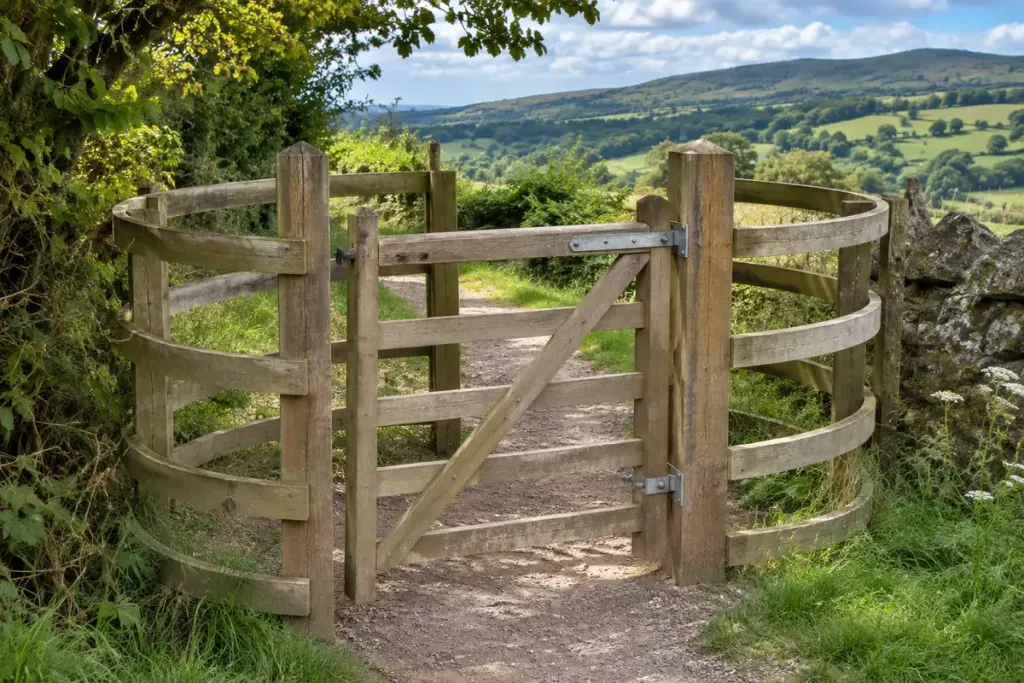
A path can be wide and level for a mile, then narrow to a small enclosure around a swinging gate. At a kissing gate, the gate leaf moves between two sides of that enclosure. A walker enters the available space, moves the leaf to the other side and leaves through the opening it creates.
The movement is easy to recognise once seen, but the space available matters. The term alone does not tell you whether a wheelchair, pushchair, large backpack or dog can pass comfortably.
Read the obstacle as part of the route
Hampshire’s countryside design standards describe kissing gates as less accessible than standard gates. Oxfordshire’s guidance also highlights the space needed for people carrying rucksacks or baby carriers. A route description that says only “no steep hills” leaves this practical question unanswered.
Before travelling, look for a recent access description or ask the route manager about the narrowest gate. Explain the dimensions or equipment that matter to you. A photograph can help, but perspective can make a small enclosure look generous. Ask whether there is a usable alternative entrance and whether any special access arrangement must be made in advance.
At the gate
Pause outside the moving area and let an approaching walker finish first. Look at where the leaf travels before stepping in. Keep fingers clear of pinch points, control loose straps and avoid trapping a dog’s lead. If your pack will not clear, step back to a stable place and reconsider the route rather than forcing yourself through.
A useful personal route note is specific: “tight turn with a large pack at the eastern field entrance” tells a future walker more than “awkward gate.” Add the location and date. Do not present your own successful passage as proof that the gate will suit somebody using different mobility equipment.
Follow local signs and the Countryside Code about leaving gates as found or as directed. Report a damaged or obstructed gate to the relevant land manager; changing its fittings yourself can affect both access and livestock control.