
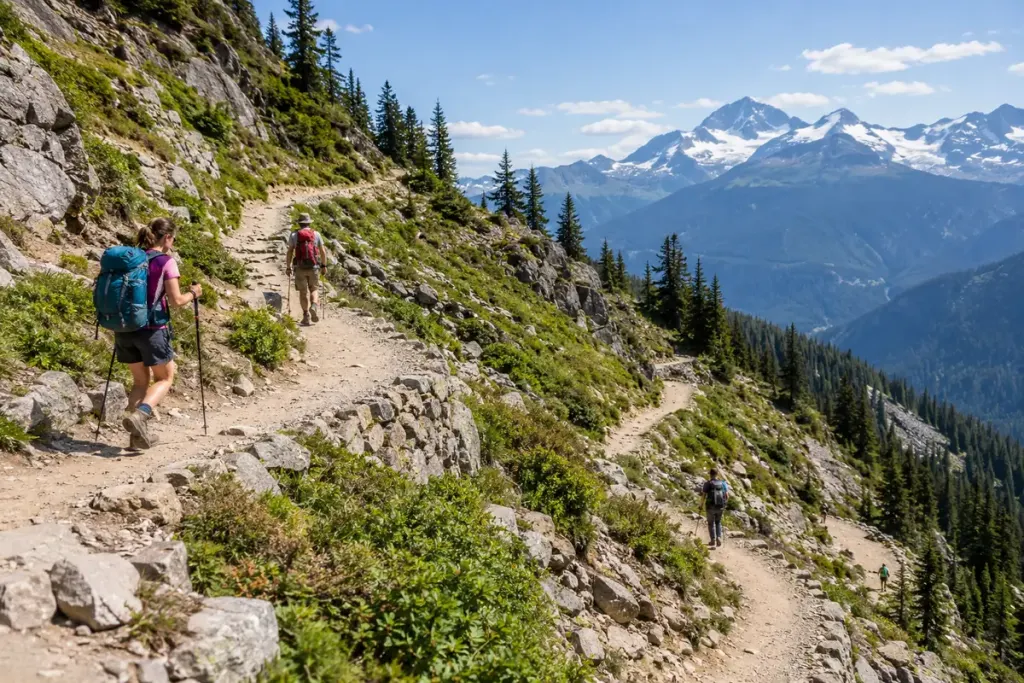
The next bend is visible a few metres below, and a worn line runs straight down to it. Taking that shortcut can feel harmless, especially when other footprints are already there. But the designed trail and the informal line do not serve the landscape in the same way.
The US National Park Service’s North Cascades planning guidance asks visitors to use the trail rather than cut its switchbacks, explaining the damage caused by trampling and erosion. Its Lassen Peak guidance likewise tells walkers not to cut switchbacks. Follow the local land manager’s rules for the route you are using.
A visible path is not always an approved route
An informal shortcut may exist because others have already damaged the slope. Its visibility does not make it a maintained alternative. Repeated use can widen bare ground and encourage more walkers to follow, particularly where a direct line appears easier to understand than the next turn.
Stay on the designated route and allow time for its actual length. If the switchbacks feel frustrating, pause in a suitable place rather than using a steep cut to make up time. Choose a turnaround time that includes the return journey and the pace of the whole group.
With companions, agree the route before someone starts descending a shortcut. A calm reminder is more useful than following them off trail to argue. For children or first-time walkers, explain that the bends are part of the route, not an obstacle to solve.
If the marked trail is blocked or unsafe, stop and assess using current official guidance. Do not improvise a shortcut across unstable ground merely because the map shows the next section nearby. Report a problem through the land manager’s established channel when practical.
A good trail decision may add a few minutes to your walk while avoiding a new damaged line across the slope. The route is shared with future visitors as well as the people beside you today.