
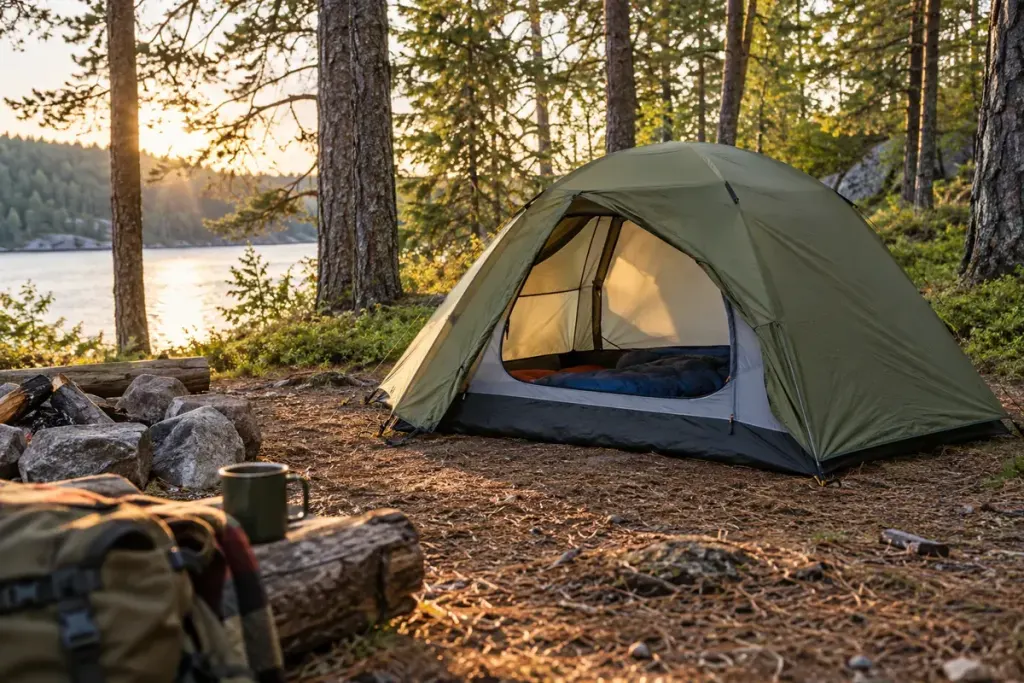
A groundsheet extends neatly beyond the tent, and the extra border seems protective. In rain, that exposed edge can instead collect water and direct it beneath the floor. A tent footprint needs to match the shelter’s design, not simply cover as much ground as possible.
REI describes its own two-person footprint as slightly smaller than the compatible tent floor to help prevent pooling underneath. This is a design principle illustrated by a particular product, not a recommendation to use that footprint with an unrelated tent.
Check the shape as well as the dimensions
Lay out the tent and its matching footprint at home, following the manufacturer’s instructions. Identify the correct side, corners and attachments. Similar floor dimensions do not guarantee that the attachment points or outline match.
If the manufacturer permits an alternative groundsheet, follow its guidance on sizing and tucking the edges. Keep material from projecting into places where rain can land on it and run underneath. Do not cut a borrowed or specialised footprint without permission and clear instructions.
The site still matters
A correctly fitted footprint cannot make a drainage channel into a good campsite. Choose a permitted site with appropriate drainage and follow local rules about ground disturbance. Do not dig trenches around the tent to compensate for poor placement.
Before pitching, remove loose sharp objects where allowed without stripping vegetation or altering the site unnecessarily. Check the tent floor for damage and use the prescribed staking and guying arrangement.
MSR’s footprint guide explains why exposed groundsheet edges can funnel water underneath. Use the current manual for your model for pitching and attachment details.
After a wet night, separate the possible sources of moisture. Rain entry, ground water and condensation are not identical problems. Record where water appeared and inspect the setup safely rather than assuming a larger sheet will fix everything.
Dry and store the footprint as directed after the trip. A quick home practice makes the campsite decision simpler: you know what belongs under the floor, what should remain covered and which parts of the shelter still need attention above it.