
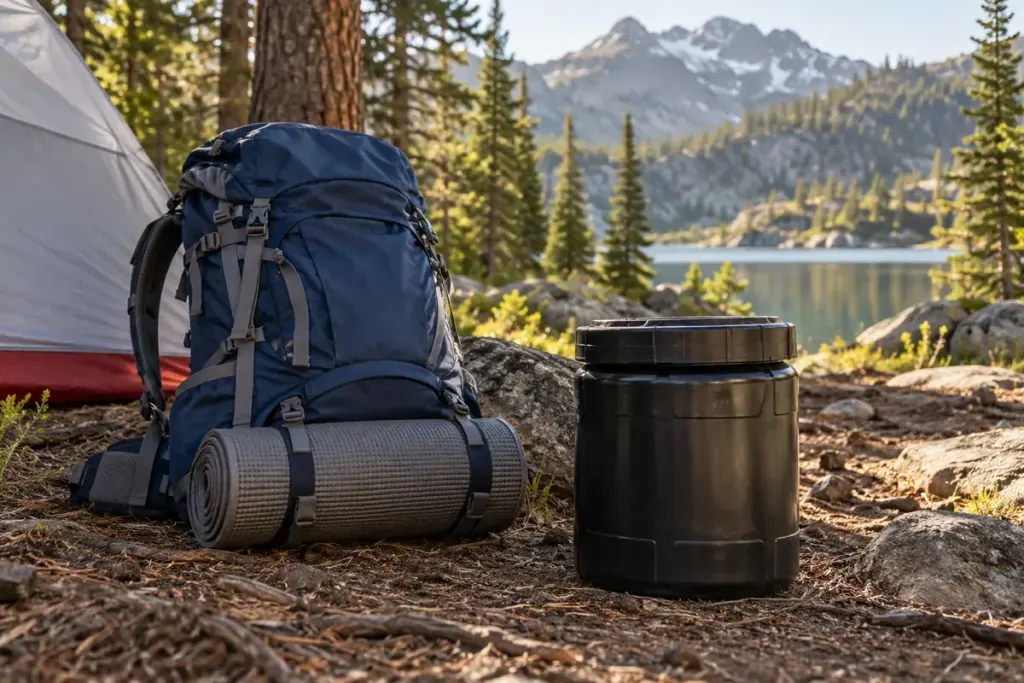
A food bag that worked on one camping trip may not meet the rules on the next. Before buying or packing storage equipment, check the current requirements for the exact campsite or backcountry area you will use.
The US National Park Service’s bear-food-storage guidance explains that requirements differ between parks. Some locations use lockers or require particular bear-resistant containers; others allow specified hanging arrangements. That is a reason to check locally, not a menu from which every visitor can freely choose.
Ask what must be stored
The rule may cover more than your dinner. Read the site’s definition of food and scented items, including rubbish and relevant toiletries. Make a list based on that guidance and test whether the required items fit in the approved storage system.
Confirm whether the campsite provides storage and whether it is shared. For a container you carry, check that the exact model and use are accepted where you are going. A product described as animal-resistant does not automatically satisfy every land manager’s requirement.
Plan for arrival and departure
Food storage is needed while unloading, preparing meals and packing up, not only while sleeping. Decide where items go during those transitions. Keep the official instructions available offline if reception may be unreliable.
If your route crosses different managed areas, check each one. A rule at the first campsite may not cover the second. Contact the ranger or land manager when instructions are unclear rather than improvising a method from an old trip report.
Never approach or attempt to retrieve food from a bear. Follow local wildlife guidance if an animal enters camp. Proper storage reduces avoidable attractants, but it does not make wildlife encounters predictable. The practical preparation is to arrive with equipment that fits both your supplies and the site’s actual requirements.