
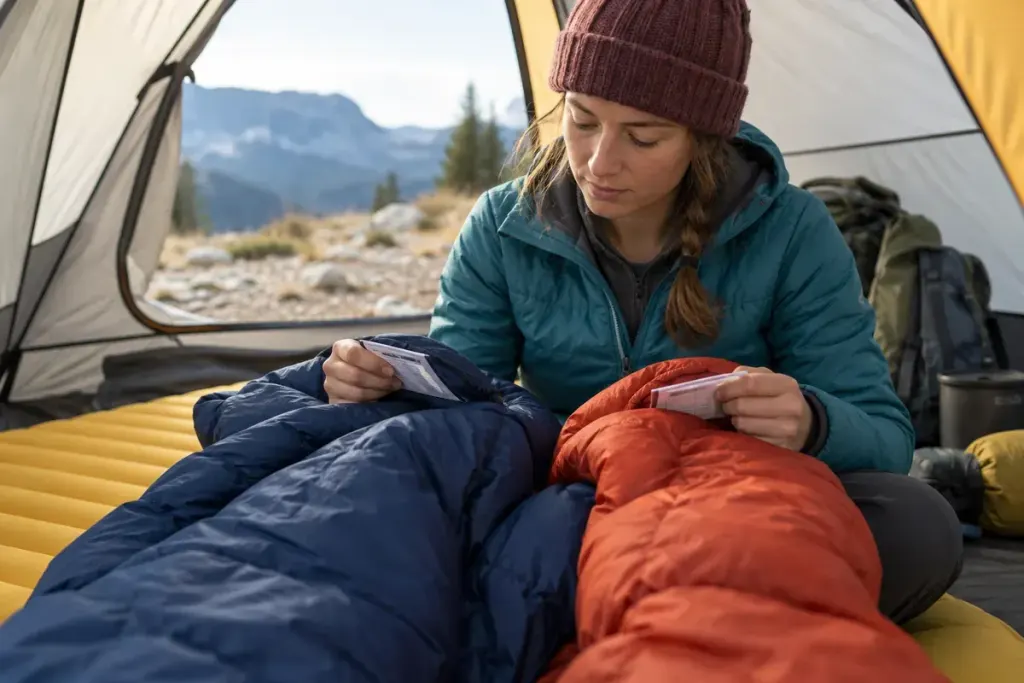
A temperature printed on a sleeping bag is not a promise about how you will feel on a particular night. Before comparing two bags, check which rating each number represents and how the rest of your sleeping setup affects the decision.
REI’s sleeping-bag guide distinguishes comfort and limit ratings under standardised testing. Comparing one bag’s comfort figure with another’s limit figure can make the second look warmer than a like-for-like comparison would suggest.
Read the full label
Record the exact model, size, rating type and whether the manufacturer identifies a recognised test method. A number in a product name may not tell the whole story. If an extreme rating is shown, do not use it as your intended comfortable camping temperature.
Consider the sleeping mat as part of the system. Insulation beneath you, shelter from weather, dry clothing and the bag’s condition all matter. A warmer-looking bag does not remove the need for appropriate ground insulation or a suitable campsite plan.
Plan for the night, not the afternoon
Check an appropriate local forecast and the conditions expected at the actual location. A nearby town’s daytime temperature is a poor description of an exposed campsite after dark. Leave a sensible margin rather than planning to operate at the edge of a quoted rating.
For a low-consequence trial, use the complete setup somewhere you can readily move to a safe, warm alternative. Note the conditions and your comfort without treating one successful night as proof that the equipment suits every future trip.
Ask an experienced outfitter or qualified guide for advice when the proposed conditions exceed your experience. Cold-weather safety depends on more than purchasing one item, and a label cannot assess a person’s health or ability to respond to changing weather.
When comparing options, keep the same columns: comfort rating, limit rating, fit, weight and the intended mat and shelter. That turns a large headline number into a decision you can actually explain.