
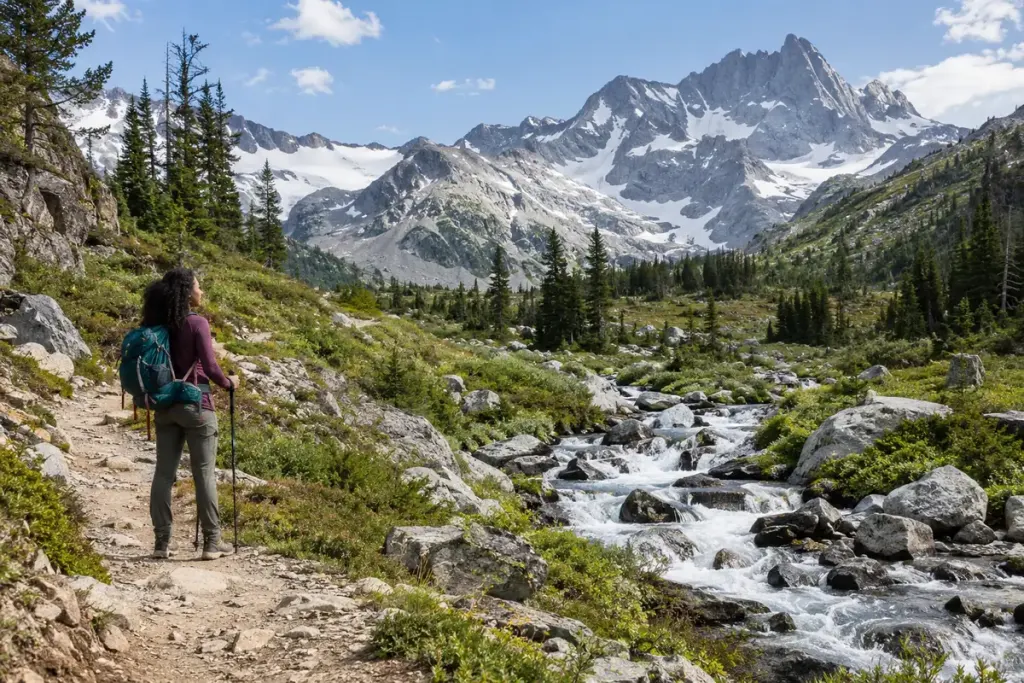
A dotted line continues across the river on the map. That tells you where a route goes, not whether the water is safe to cross today. The decision belongs in the planning stage and needs to be reconsidered at the bank.
The US National Park Service’s river-crossing guidance stresses being willing to turn around, wait or go elsewhere when conditions are unsuitable. A successful walk does not require completing every line on the original route.
Ask about the crossing before the trip
Check current local advice, closures, weather and whether a bridge exists and is open. Rain upstream, snowmelt and changing conditions can matter even when the weather beside you looks calm. An old trip report is useful context, not today’s permission.
Plan an alternative that does not depend on crossing. Consider how turning back affects daylight, transport and the person expecting you home. If your pickup arrangement assumes you must reach the opposite bank, revise that arrangement before starting.
Pause well before the edge
Keep the group together in a safe place and assess whether the situation matches the plan. Water depth, speed, cold, footing and the ability of every participant matter. If you are unsure, do not use a tentative step into moving water as the test.
This article does not teach a crossing technique. Those skills require appropriate training and judgment in the specific environment. Watching another person cross does not establish that the route is safe for you or that conditions will remain unchanged.
Avoid improvising a risky detour along unstable banks to rescue the itinerary. Use an established safe alternative or turn back. Communicate a changed return plan when you can do so safely.
Afterwards, record the conditions and the decision without presenting your experience as a guarantee for future visitors. Sometimes the most useful note in a walking journal is the place where the plan changed for a good reason.