
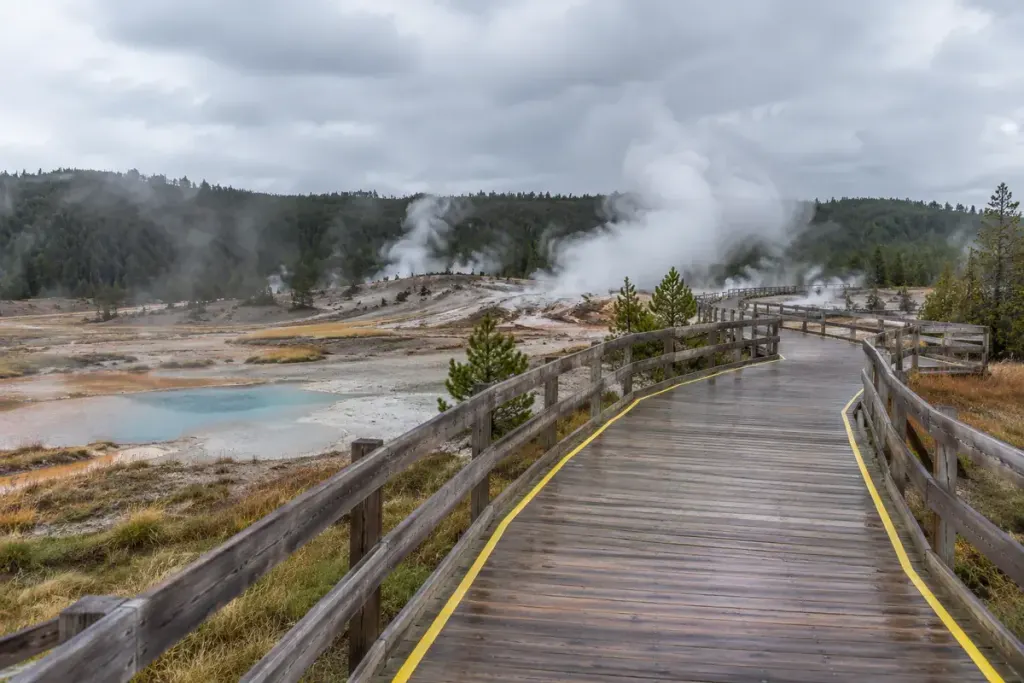
A thin plume rising from the ground can tempt a walker to step closer for a photograph. In a volcanic or geothermal area, that small-looking feature belongs to a landscape where heat, gases and unstable surfaces may be difficult to judge by sight.
A fumarole is a vent that releases steam and gases. Its appearance is not a reliable guide to the safety of the ground around it. At Yellowstone, the National Park Service’s safety guidance requires visitors to stay on boardwalks and designated trails in thermal areas. Other sites have their own restrictions, which should guide the visit.
Treat the route as part of the protection
A boardwalk is not merely the easiest way to get a clear view. It helps keep visitors away from hazardous ground and protects fragile features. Do not step off for a dropped object, a shorter route or a photograph without other people in it.
Check closures and current site information before setting out. A path described in an old guidebook may not be open now. Wind and visibility can also change what you can see without making a closed area safe to enter.
Plan for a patient visit
Choose footwear and clothing suitable for the approved route and the weather. Keep children close and explain the boundaries before reaching a busy viewpoint. Follow the site’s rules for pets rather than assuming they can accompany you everywhere a person can walk.
Photograph from the permitted surface and wait for a clear moment instead of moving beyond a barrier. Avoid leaning over vents or using smell as a test for whether gases are present. If staff direct visitors away, follow the instruction promptly.
If someone is injured or an object falls into a thermal feature, notify site staff or emergency services. Do not attempt an improvised retrieval that exposes another person to the same hazard.
The best preparation is an official map, current access information and enough time to remain on the intended route. A dramatic landscape does not need a closer approach to become a worthwhile visit.