
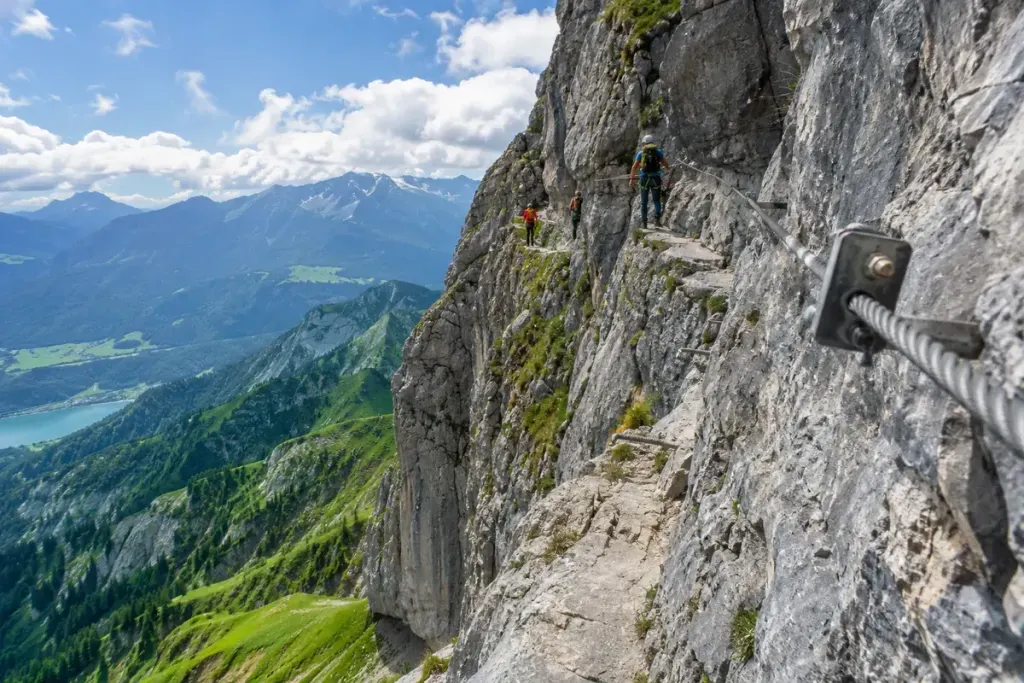
A steel ladder bolted to a cliff can look reassuringly permanent. On a via ferrata, however, the cable, anchors and rungs are equipment exposed to the mountain environment. Their fixed position does not guarantee their condition.
The British Mountaineering Council’s via ferrata guidance explicitly warns that these installations can fail. It advises looking for obvious concerns such as loose cable anchors and badly rusted or loose ladders. That observation is different from certifying a structure as safe.
Ask who maintains the route
Before travelling, find the recognised operator or local authority responsible for route information. Look for closure notices and ask where current condition reports are published. An attractive photograph from a previous season does not answer whether a section is open today.
The UIAA’s via ferrata construction standard covers design, construction, inspection and maintenance. Its scope is a useful reminder that installing hardware is only one stage of managing a route. A visitor’s quick look cannot replace that professional process.
Make a concern easy to locate
If an issue is observed from a safe position, describe the location using the operator’s section names or numbered markers where available. A message such as “loose-looking rung near marker 12, observed this morning” gives the responsible team a clearer starting point than “the ladder was strange.” Only take a photograph if doing so does not compromise your position or other people’s safety.
Do not pull on a suspect anchor to test it, attempt a repair or move past a closure because another party did. If a concern arises after entering the route, follow your guide’s instructions or seek appropriate assistance; an improvised detour across exposed ground can introduce another hazard.
Personal equipment, instruction and the condition of the fixed installation are separate parts of preparation. None makes the others unnecessary. For a first visit, a qualified guide can explain how the route is managed and what decisions the group will make if conditions differ from expectations. Leave inspection and repair decisions to those qualified and responsible for the installation.