
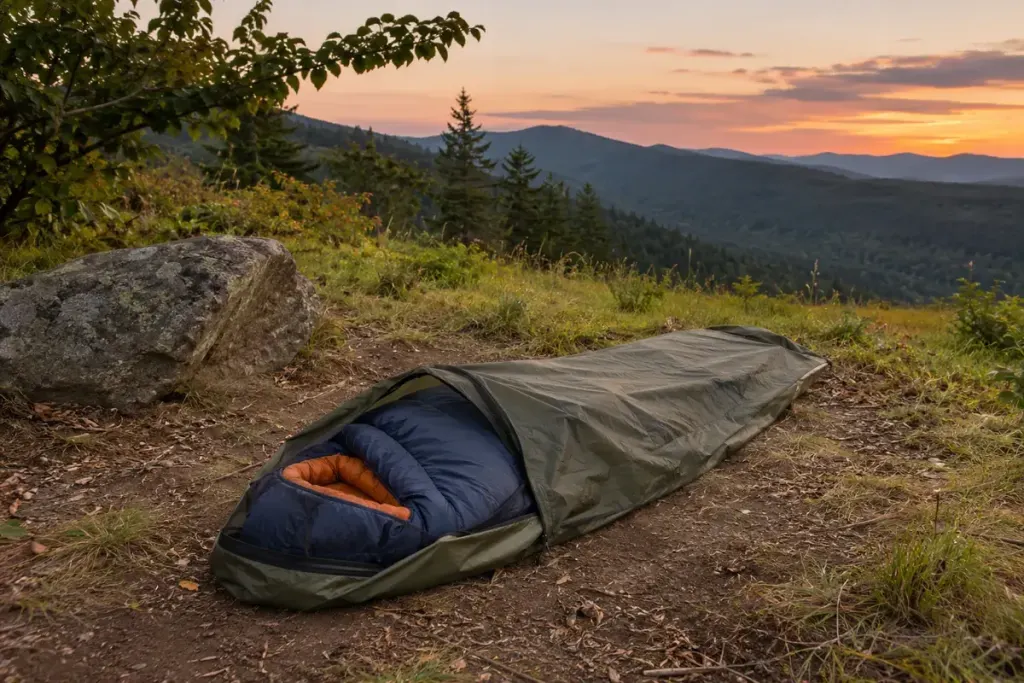
A bivouac may mean a very simple night outside, perhaps with a sleeping bag and a protective bivy rather than a full tent. The light equipment can make the plan feel informal. The permission to stay overnight is not informal, and the word does not create an exemption from local rules.
The Swiss Alpine Club’s camping and bivouacking guidance is a useful example of place-specific advice. It distinguishes situations and locations rather than treating all open mountain ground alike. That guidance should not be exported as a rule for another country.
Check the exact place, not just the region
Land ownership, protected-area rules, municipal restrictions, and seasonal closures can all matter. Ask the relevant land manager about the intended site and date. A route description saying “good bivouac spot” may describe physical space without establishing current permission.
Also distinguish a planned overnight stop from an unforeseen emergency. Packing light by choice does not turn the planned stop into an emergency, and a genuine emergency does not make the location a suitable recommendation for future trips.
Build a fallback into the plan
Before leaving, identify a legal alternative and a realistic turnaround point. Consider exposure to weather, cold, falling material, rising water, and the needs of the people travelling with you. A compact shelter is not automatically suitable protection for the conditions.
Tell your contact what the overnight plan is and how it changes if you turn back. Carry the equipment and navigation skills appropriate to the route; a picturesque photograph of someone else’s bivy provides little evidence about their actual conditions.
When a stay is permitted and conditions are suitable, keep the footprint small, avoid disturbing wildlife, and remove all waste. The best bivouac story is not the one that proves how little equipment you carried. It is the one where access, conditions, and an exit plan were settled before darkness made the choices harder.