
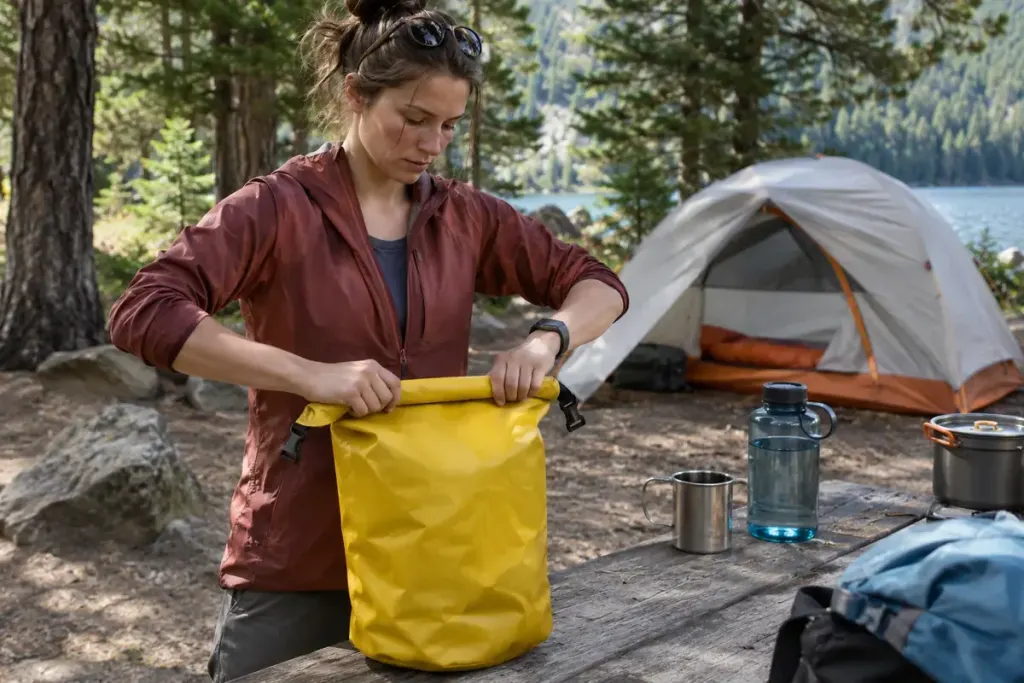
A dry bag filled to its lip has lost the space its closure needs to work. The empty-looking fabric above the contents is functional. It has to form the folds or rolls specified for that bag, without a jacket sleeve or other object trapped through the opening.
Sea to Summit’s closure instructions describe inspecting the fabric, expelling excess air and making the required rolls before clipping the buckle. That is a manufacturer’s method for its products, rather than evidence that every bag uses the same construction or has the same water-resistance limits.
Check the empty bag first
Look for damaged coating, worn areas and contamination around the closure. Spread the opening so you can see whether the surfaces that meet are clean and unobstructed. A carefully rolled top cannot compensate for a puncture elsewhere.
Pack enough below the closure to leave the required rolling space. If you must force the contents down while struggling to join the buckle, reassess the load or choose a more suitable size. A printed capacity is not an invitation to use the entire height as tightly packed storage.
Keep the closure deliberate
At camp, it is easy to undo the bag for one item and then leave it loosely clipped. Treat reopening as a complete reset: clear the opening, make the specified folds or rolls again and secure the fastening. A buckle joining two corners does not prove the material between them was rolled properly.
Decide what the bag is protecting against before departure. Rain inside a rucksack, splashes in a boat and sustained submersion are different demands. Check the product’s stated intended use, especially for electronics or items whose loss would affect safety.
A useful packing rehearsal uses ordinary spare clothing before the trip, with the bag fully loaded as intended. It lets you judge access and closure space without discovering at the waterside that the chosen bag is awkwardly small.