
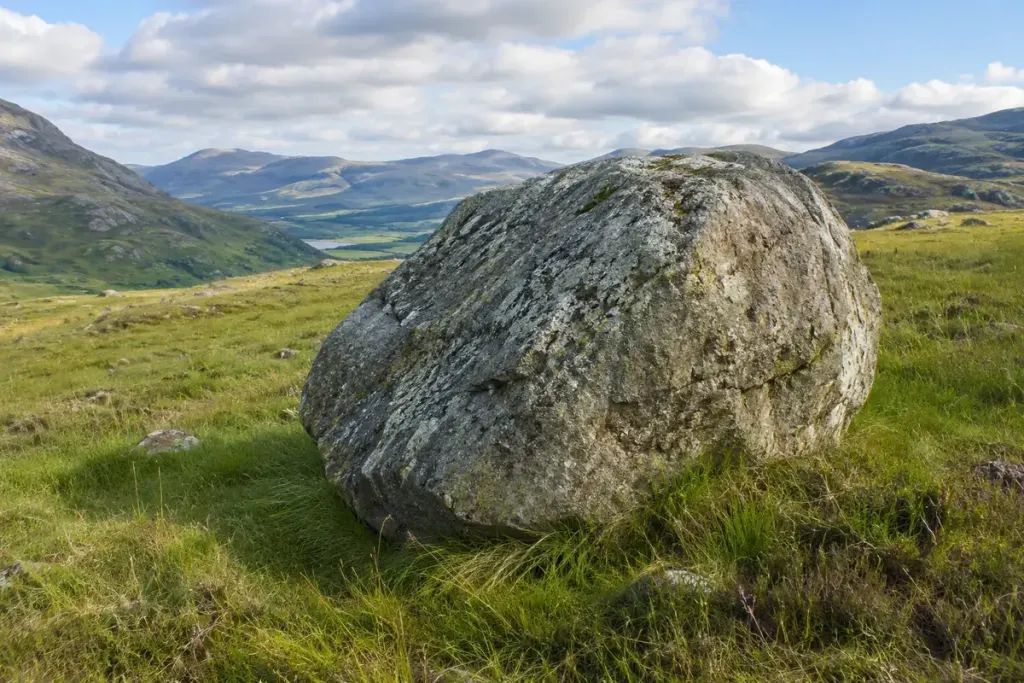
A lone boulder in a field can feel like a misplaced piece of scenery. On a glaciated landscape, it may be an erratic: rock carried by ice and left behind after the ice melted. The interesting question is not simply why it is large, but how it relates to the ground around it.
The US National Park Service’s explanation of erratics describes glacial transport and deposition. Its Rocky Mountain National Park glacier guide also places transported rocks among the wider traces left by moving ice. A boulder does not become an erratic merely because it stands alone or looks photogenic.
Start with context, then inspect the rock
On a marked walk, read the local interpretation before making an identification. Does it describe a former glacier, a moraine or a known transport route? Does it identify a rock type that differs from the surrounding bedrock? That local evidence is stronger than resemblance to a photograph taken in another country.
From the path, note colour, texture and the setting. A close view may show mineral grains, while a wider photograph records the slope and nearby rocks. Keep those two views together. A dramatic close-up without context can hide exactly the information that makes the geological story interesting.
Make a three-line field note
A useful walking note separates what you observed from what someone explained. For example:
- Observed: a rounded grey boulder beside the signed trail, contrasting with nearby reddish exposed rock.
- Local explanation: the interpretation panel identifies it as glacially transported material.
- Still uncertain: the source location and the distance travelled.
This is an illustrative record, not a report from a particular site. The format helps you avoid turning a reasonable possibility into a confident identification. If no reliable local source is available, “possible erratic” is a more useful note than a story you cannot support.
Leave the rock and its surroundings undisturbed. There is no need to chip a sample or climb a protected feature to appreciate it. Check the park or land manager’s access instructions and keep clear of unstable ground.
Once you start looking at the relationship between a boulder and its landscape, an ordinary pause on a walk can open up a much larger question: what moved through this place before the present path existed?