
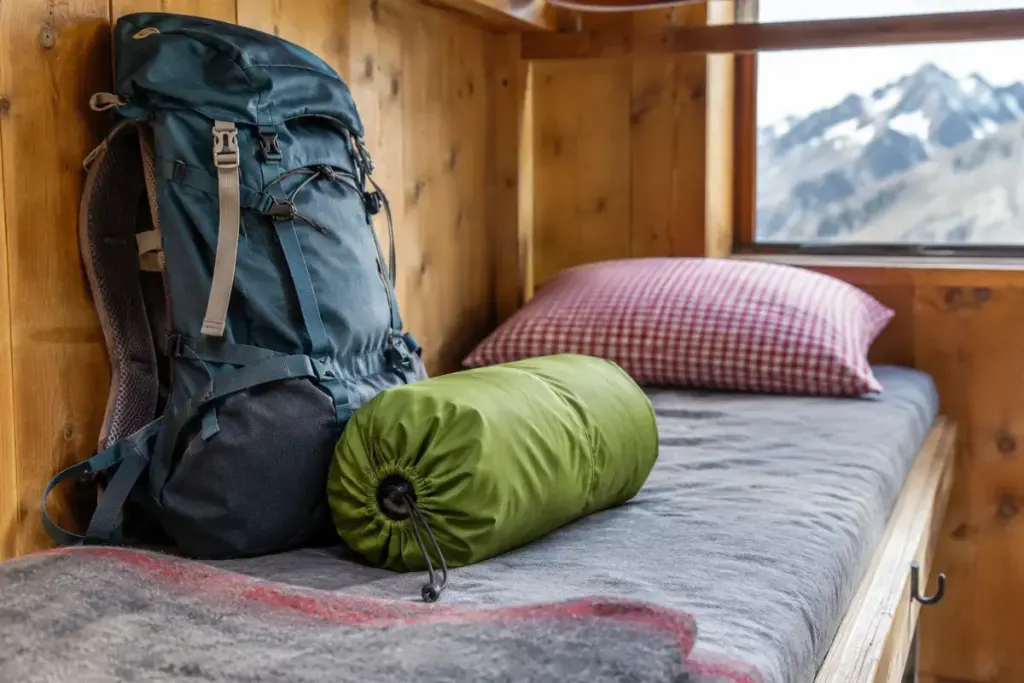
A hut packing list may ask for a sleeping liner even when blankets are provided. That small item has a different job from the insulated sleeping bag you would choose for a cold camp.
The Swiss Alpine Club’s basic mountain-hiking equipment list includes a hut sleeping bag for an overnight stay. Alpine-club guidance for the Glockner Trail huts similarly asks visitors to bring a liner. These examples explain why the item appears on hut lists; the current rules of the hut you book still take priority.
Ask what is supplied
Confirm whether the hut supplies blankets, duvets or other bedding and whether there are requirements for the liner. Staffed huts, winter rooms and unstaffed shelters may have very different arrangements. Do not turn “blankets usually provided” from a travel account into a promise for your booking.
A thin liner gives you a personal washable layer, but it should not be assigned a reliable outdoor temperature rating by guesswork. If the trip includes camping or an unheated shelter without adequate bedding, the sleeping system needs to be planned for that separate situation.
Try the small practical details at home
Climb into the liner, check its length and practise finding the opening in low light. If it has a pillow pocket or fastening, understand how it works before arriving tired in a shared room. Pack it where you can reach it without unpacking every wet item onto the bed.
Imagine reaching the hut during rain. A dry liner in a protected bag is immediately useful; one packed loose beside damp clothing is less so. Keep sleeping items separate from wet equipment and follow the hut’s instructions about where boots and packs belong.
After the trip, wash and dry the liner according to its care label before storing it. Check seams and closures while the last stay is still fresh in your mind.
The best packing decision comes from the actual accommodation and route. A light liner can be exactly the right item for a booked hut, while still being completely insufficient for a night outside.