
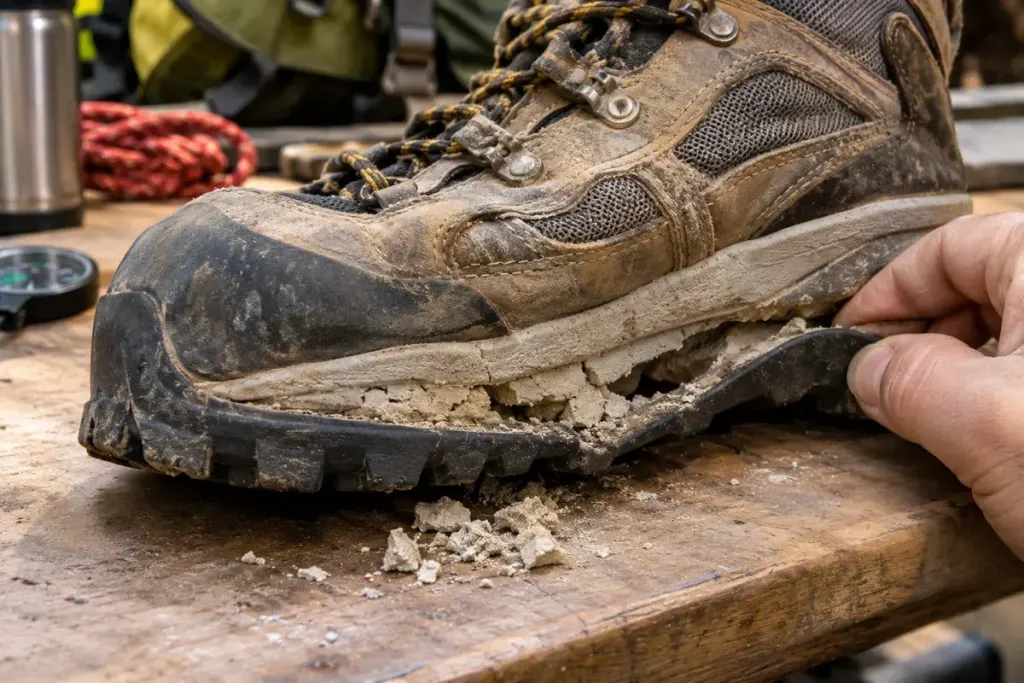
The tread still looks deep, but the sole starts separating during a walk. Footwear can age while it sits in a cupboard, so little visible wear on the rubber does not establish that the whole boot is ready for a demanding trip.
One cause is hydrolysis affecting a polyurethane, or PU, midsole. Moisture contributes to the material’s deterioration over time. LOWA’s explanation of hydrolysis and sole separation identifies signs including cracking, crumbling foam, and separation after extended storage. Its warranty terms apply to its own products; the material issue is distinct from the terms of a particular claim.
Inspect the layer above the tread
Before packing long-stored boots, clean them as their care instructions allow and examine the midsole and the join around the sole. Look for crumbly material, cracks, or separation. Check both boots rather than assuming one sound-looking shoe represents the pair.
A short local walk before a remote trip can reveal a problem while help is close. It cannot guarantee the condition of an ageing material, and visible deterioration should not be treated as something to test on a longer route.
Ask about repair before discarding the upper
If the sole assembly is failing, contact the manufacturer or an appropriate repair service with the model details, approximate age, storage history, and clear photographs. Some constructions can be professionally resoled; others cannot. Let the actual boot determine the answer.
Do not assume a line of household glue repairs a crumbling midsole. If the underlying material is breaking down, attaching the outer edge may leave the main problem untouched. A temporary trail repair, if needed to reach safety, is not proof that the boot is suitable for the next trip.
Store footwear according to its maker’s guidance, allowing it to dry appropriately after use. Keep an approximate purchase date in your gear record alongside repairs.
When checking equipment, give ageing materials the same attention as missing tread. A boot can have plenty of rubber left and still need professional assessment before it carries you far from the trailhead.