
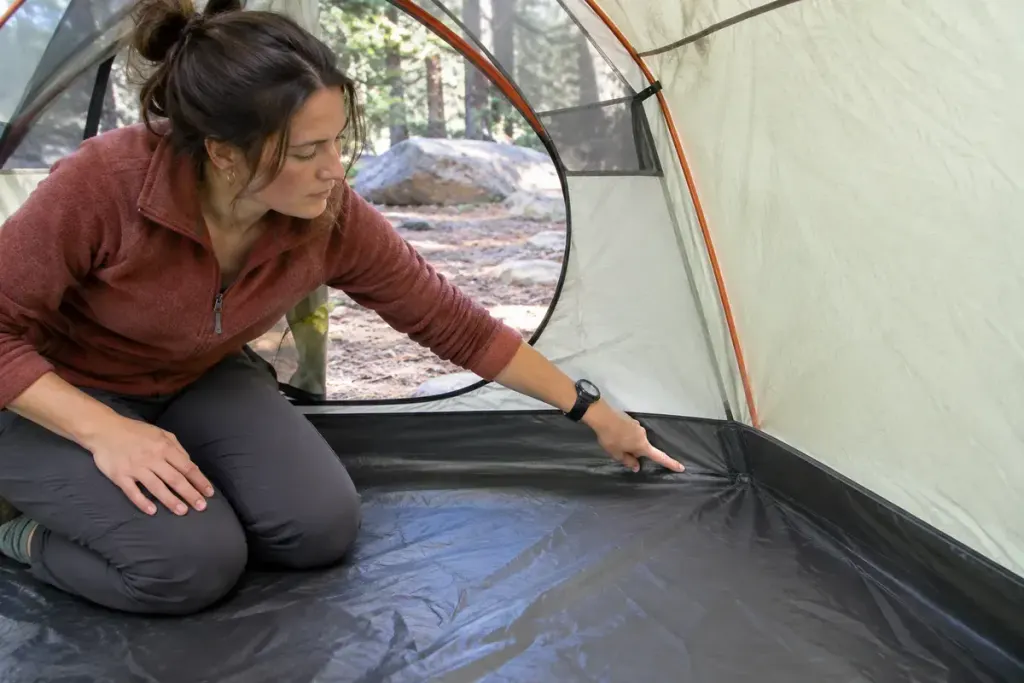
The lower edge of some inner tents rises like a shallow tray before joining the upper fabric or mesh. This is commonly called a bathtub floor. Its raised sides help keep the floor’s edge above the surrounding ground, but the name should not be read as permission to pitch in standing water.
Hilleberg’s tent handbook illustrates high bathtub floors as a design feature intended to help keep out ground water. The usefulness of that shape still depends on the particular tent’s materials, construction, condition and pitch.
Inspect the floor while the tent is set up
Look at the corners and the transition to the inner wall. Is the raised edge standing as intended, or pulled down by an uneven pitch? Has luggage pushed the side into an awkward position? Checking the tent empty first makes these details easier to see.
Also inspect the floor fabric and seams according to the maker’s care instructions. The floor’s shape does not repair a puncture, worn coating or failed seam. MSR’s tent-care guidance, for example, discusses waterproof coatings, seam treatment and the importance of drying before storage. Its procedures apply to the relevant products; other fabrics may need different care.
Choose the site before relying on the feature
In an illustrative campsite comparison, a level area that drains away from the tent offers a different situation from a hollow where runoff collects. A raised floor edge does not remove the need to assess that difference.
Follow local campsite rules and the tent maker’s instructions. Avoid excavating drainage trenches around a pitch or damaging vegetation to solve a poor site choice. If water is accumulating, reassess the location rather than treating the floor as a small boat.
For a purchase comparison, ask about floor construction, care and repair alongside packed weight. A photograph showing a high edge is useful, but it cannot establish how a used tent’s coating or seams will perform. The best check combines the design with the condition of the actual shelter.