
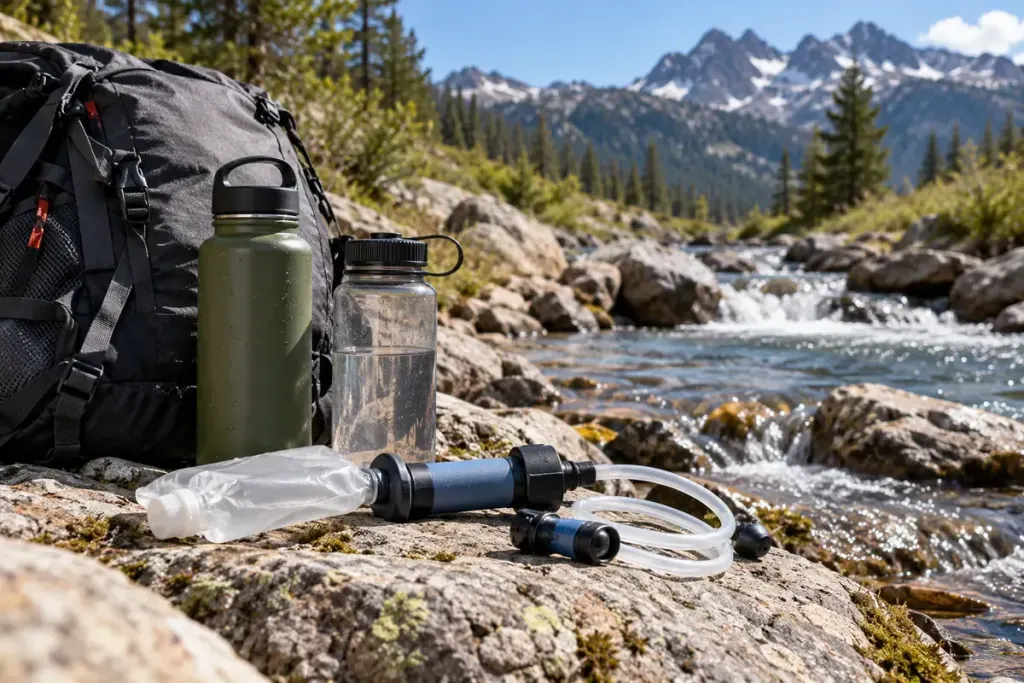
A stream can look clear enough to photograph and still be unsuitable to drink untreated. Visibility tells you little about microorganisms, and it does not rule out chemical contamination. Choose a water plan before the walk rather than deciding from the appearance of the first source.
The CDC’s guidance for hiking and camping distinguishes boiling, filtration and disinfection. Different methods address different hazards. A filter that removes parasites does not automatically remove viruses, and ordinary boiling or disinfection cannot make chemically contaminated water safe.
Read the treatment claim precisely
Check which organisms the product is designed to address, its required contact time or operating method, and any limits involving temperature or cloudy water. “Water filter” is a product category, not a complete performance specification. Follow the manufacturer’s instructions and current public-health advice for the destination.
If a combination of filtration and disinfection is needed, plan the full sequence and carry enough supplies for it. Do not shorten a treatment time because the group is thirsty. For boiling, use the applicable guidance for elevation and conditions rather than assuming a brief appearance of bubbles is sufficient.
Keep dirty and treated water separate
Mark collection containers and clean containers clearly. Avoid letting an untreated-water hose, bottle thread or wet hand contaminate the clean side after treatment. A good device cannot compensate for mixing the two stages at the end.
Check local advisories about mines, industry, agricultural runoff, algal blooms or other source problems. If contamination makes the source unsuitable, move to a known safe supply or change the route. Do not treat a general-purpose backpacking filter as an answer to every chemical hazard.
Before departure, test the equipment according to its instructions, inspect it for damage and understand its maintenance and storage requirements. Carry a workable reserve or alternative for a failed device or unavailable source.
A useful route note names the planned source, its uncertainty and the treatment you will use. “There is a river nearby” is not yet a drinking-water plan.