
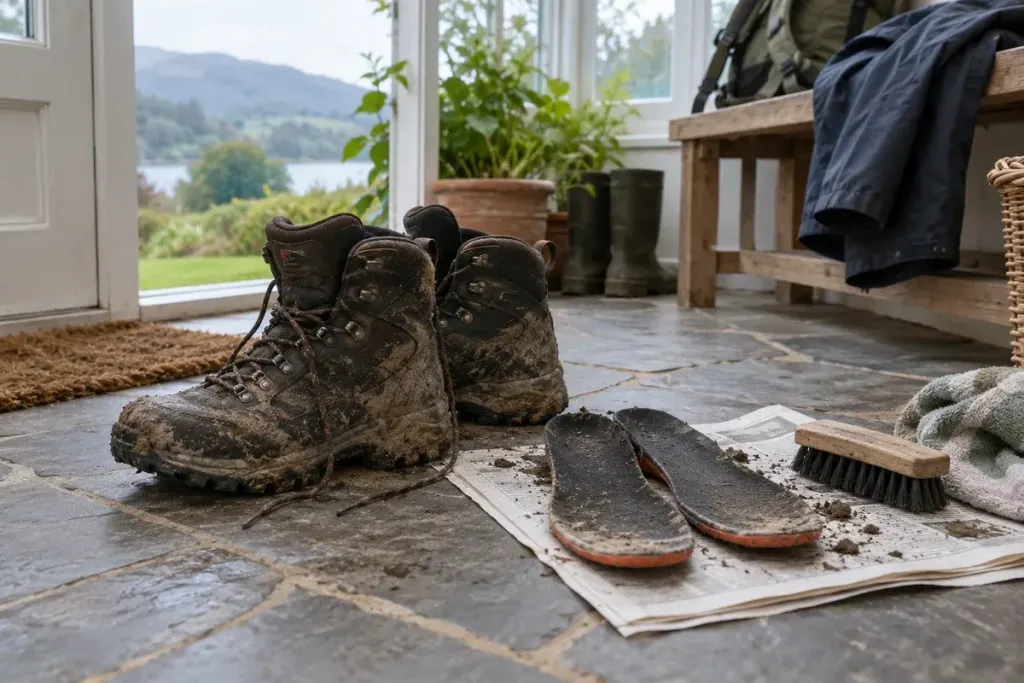
The walk is finished, but the boots are wet through. Tomorrow’s route is already planned, and the radiator looks like the quickest solution. Before moving the boots closer, check what their materials can tolerate.
Drying is part of equipment care, not simply a race to make the surface feel warm. Excessive heat can damage components and leave you with a more expensive problem than damp footwear.
Open the boot up
Follow the manufacturer’s instructions for cleaning off mud and removing insoles or laces. Give air a route through the boot rather than leaving it tightly closed in a bag. Keep the drying area ventilated and protect surrounding surfaces from water and dirt.
LOWA’s boot-care guide warns against direct heat and explains care for its footwear. Use the guidance for your own model and materials; leather, synthetic uppers, membranes and glued components can have different requirements.
Check the inside, not only the upper
A dry-looking exterior does not establish that the lining and insole are ready. Check them separately. If the manufacturer permits absorbent material inside, replace it as appropriate rather than leaving a saturated wad in place and assuming the job is done.
Do not use an oven, open flame or improvised high-heat treatment. A dedicated drying device also needs to be compatible with the footwear. “Faster” is not useful if the method changes the fit or weakens the construction.
Use the pause for an inspection
Look for damaged seams, sole separation, debris and worn laces. Note where water entered if you can distinguish it: over the cuff, through a damaged area or during prolonged exposure. Do not assume every wet boot has a failed waterproof membrane.
Apply cleaning, conditioning or water-repellent products only as directed and at the appropriate stage. Layering unrelated products can create more uncertainty about what the material needs.
Let the equipment influence tomorrow’s plan
If the boots remain unsuitable, consider a different route, alternative appropriate footwear or a postponed walk. A demanding outing should not depend on pretending the equipment is ready. Check socks and feet as well, and address discomfort rather than walking through worsening pain.
Once the boots are fully ready, store them appropriately instead of sealing residual moisture into a cupboard. The evening’s care is part of tomorrow’s preparation—and sometimes the best decision it supports is a smaller walk.