
A trail page gives you a distance, a photograph and an appealing description. What it cannot know is how your group moves, when you will arrive or whether the conditions have changed since the photograph was taken.
Use the description as the beginning of a plan. Five decisions connect it to the day you are actually going to have: route, conditions, timing, group needs and what someone should do if you do not return as expected.
Choose the route you can explain
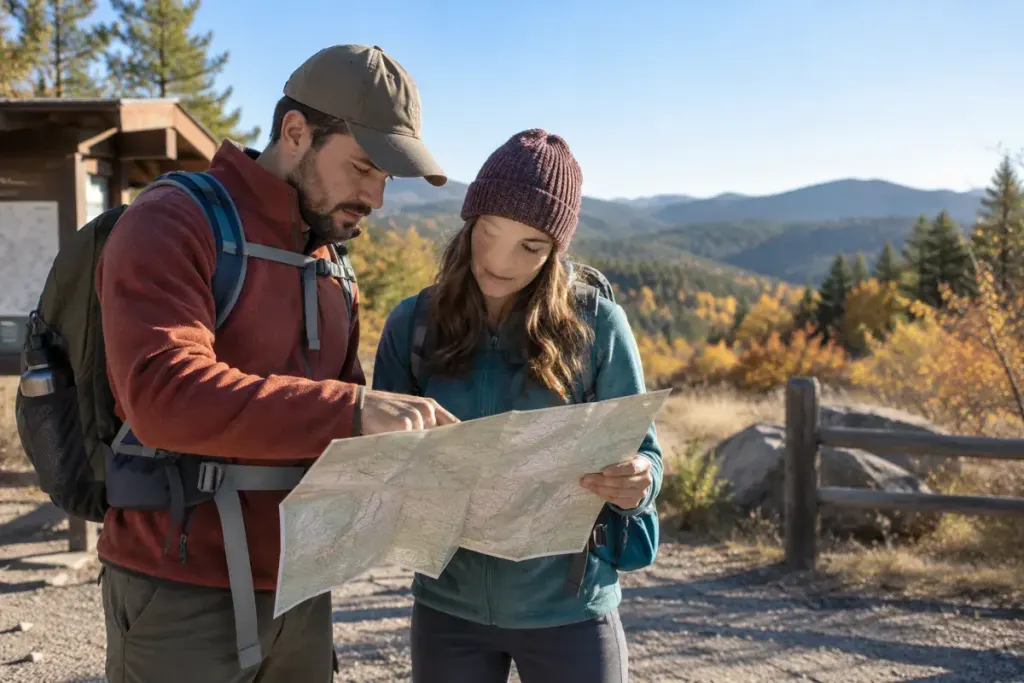
Identify the start, finish and important junctions on an appropriate map. Check whether the advertised distance is one way, a loop or the full return journey. Note elevation change and the type of terrain rather than relying on distance alone.
The US National Park Service trip-planning guide encourages visitors to research conditions, assess their abilities and share a plan with a trusted contact. Use the local land manager’s information for the place you intend to visit; an American park guide does not describe every route worldwide.
Check what is true now
Look for closures, access restrictions, weather information and other relevant local notices close to departure. A saved route can remain on your phone after a bridge closes or a seasonal restriction begins. If the available information is unclear, contact the responsible land manager or choose a more suitable option.
Describe the conditions you are prepared to handle and those that would change the plan. Do not treat arriving at the trailhead as a commitment to continue regardless of what you find.
Set a turnaround decision
Build time for travel to the start, breaks, slower sections and the return. Agree a point or time at which you will turn back if progress is slower than expected. The exact choice depends on the route, daylight, conditions and group; there is no universal number that makes every walk safe.
As an illustrative example, a group might decide to skip an optional viewpoint if reaching the junction takes longer than planned. That decision is easier when it was discussed beforehand, rather than negotiated after everyone is tired.
Plan around the whole group
Ask about experience, pace, equipment and access needs without assuming the fastest person represents everyone. Agree how the group will stay together and what to do if someone wants to stop. Bring equipment appropriate to the route and learn how to use it before relying on it outside.
Our day-pack check helps connect the contents of a bag to foreseeable problems, but equipment does not replace judgment or suitable skills.
Leave a plan that another person can use
Give a trusted contact the intended route, group details, expected return and agreed action if you are overdue. Include the relevant local emergency arrangements. Tell them about changes and confirm when the trip is complete.
A good plan should fit on a page and still make sense to someone who is not joining the walk. That clarity helps you notice gaps while you can still change the day easily.